Standard Porta Potties — Philadelphia, PA
Standard Porta Potty Rental in Philadelphia
Standard porta potty rental in Philadelphia for job sites, rowhome rehabs, block parties and outdoor events: the single-stall portable toilet with a seat, a urinal, a vent and hand sanitizer, delivered clean, serviced every week and quoted the same day.
This is the unit most people picture when they hear porta potty, and it's the one most Philadelphia job sites run on. It does one job, it does it in about a four-foot square, and it does it well as long as it's serviced on schedule and there are enough of them for the people using them.
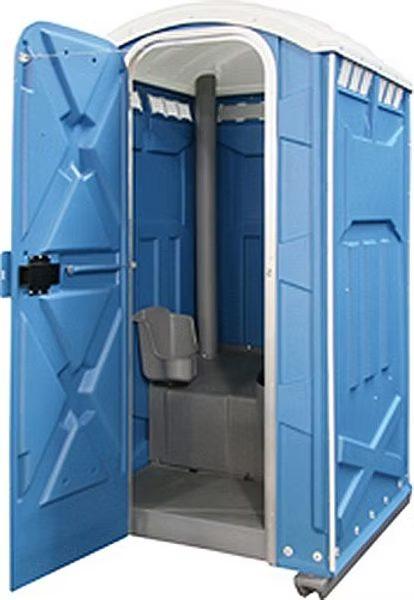
Seat, Urinal & Sanitizer
Everything a crew or a crowd needs in one ventilated stall.
Weekly Service Included
Pumped, washed and restocked every week on a job site.
Fits a Rowhome Block
Small enough for a sidewalk, a back lot or inside a framed shell.
One Quote, One Invoice
Add hand washing, a dumpster or a container on the same bill.
What's Inside a Standard Unit
Every standard unit is built the same way, whatever color the shell is. Inside one door and about four feet of floor, you get:
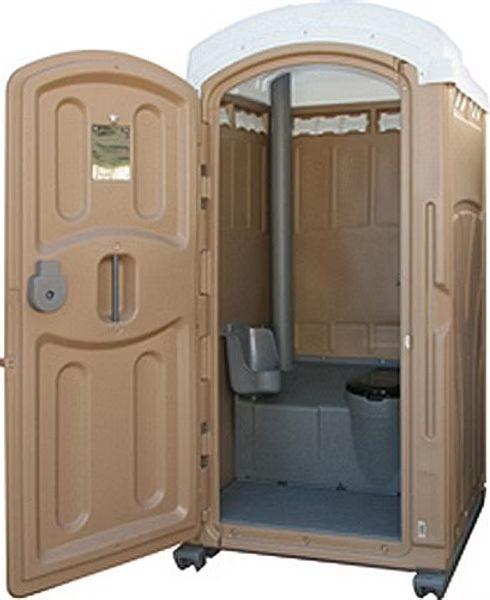
Seat & Holding Tank
A molded toilet seat with a lid over a sealed holding tank, charged with deodorizer when it's delivered and every time it's pumped.
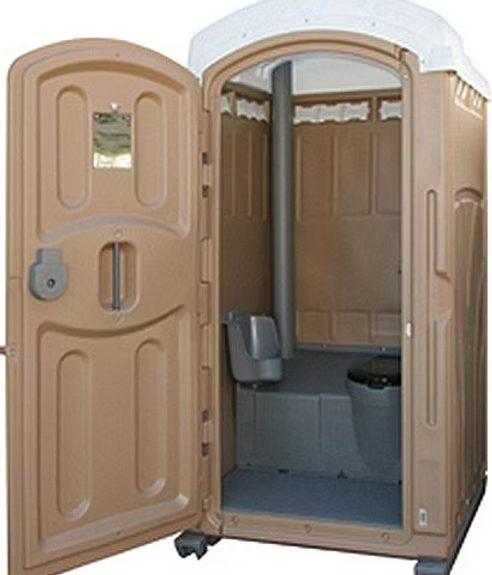
Urinal
A separate urinal on the side wall, which is why one standard unit counts as one toilet seat and one urinal on OSHA's table and why the line for it moves faster.
Vent, Light & Latch
A vent pipe that draws air up and out of the tank, a translucent roof that lets daylight in, a coat hook, and a door latch with an occupied sign so nobody walks in on anybody.
Who Rents a Standard Porta Potty
The standard unit covers most of what Philadelphia needs a portable toilet for. General contractors put one on every job before the first wall comes down. Roofers, masons, painters and landscapers put one on a long job at a house with no restroom the crew can use. Developers building rows of new townhomes in Fishtown, Point Breeze or Brewerytown keep a line of them along the lot until the sewer connection is live.
Outside of construction, standard units show up at block parties, church picnics, youth soccer and baseball fields, farmers markets, park cleanups, film shoots and any outdoor gathering where the building's restrooms aren't enough or aren't open. For a wedding or an event where guests expect more, the flushing porta potty or a luxury restroom trailer is the step up; for a crew or a crowd that just needs a clean restroom, the standard unit is the right call.
How Many Standard Units a Job Site Needs
OSHA's construction sanitation rule (29 CFR 1926.51, Table D-1) sets the minimum. One toilet covers a crew of 20 or fewer. Above 20 workers, the site needs one toilet seat and one urinal for every 40 workers, and above 200, one of each for every 50. Because a standard unit has both a seat and a urinal, each unit counts toward both.
That's the floor, not the comfortable number. A crew of 18 can legally share one unit, but by Thursday afternoon that unit has had a long week. On a job where the headcount climbs as trades overlap, plan for the busiest weeks, not the first one, and add a unit when the drywall and mechanical crews show up together. Our guide to how many porta potties you need walks through job sites and events in more detail, and the OSHA sanitation guide covers the rest of the rule.
How Many for a Party or Event
For events, the count comes from three things: how many people, how long they're there, and whether there's alcohol. A backyard party of 50 for an afternoon is a different load from 300 people at a block party that runs into the evening with a beer truck. Drinks roughly speed up how often people need the restroom, and a long event means more trips per person.
Send the headcount, the hours and what's being served, and we'll put the count on the quote. Public events need at least one accessible unit in every group of restrooms under the ADA Standards, so an ADA porta potty goes alongside the standard units, and any event with food should have a hand wash station close by.
Where a Standard Unit Goes on a Philadelphia Job
Most permits in the city are pulled on rowhome blocks, where there's no driveway and no side yard. A standard unit is small enough to make that work. It can stand on the sidewalk tight to the building line, in the rear yard or alley lot, or inside the shell once the first floor is framed and there's a door the truck can reach. On a new infill lot it usually goes at the front corner, where the crew walks past it and the service truck can pull up.
- Level & Firm: Flat pavement, packed gravel or a dry, level patch of ground. A unit on a slope or soft dirt leans, and a leaning unit tips.
- Reachable by the Truck: The service truck has to stop close enough to run a hose to the tank, so the unit can't be behind a fence or around a building.
- Door Facing the Work: Turned toward the crew and away from the neighbors' front steps.
- Out of the Way: Clear of the curb ramp, the fire hydrant, the dumpster drop zone and the path materials come in on.
Sidewalk Placement & the City
A unit on the sidewalk or the street is in the city's right-of-way. Philadelphia's portable toilet permit covers public events and units in public spaces, and residential units at events have to be serviced at least every 48 hours. On a job site, the placement usually rides along with the contractor's other right-of-way approvals for the work. The Philadelphia portable toilet permit guide explains which permit applies when, and our porta potty placement guide covers where a unit can and can't go on a city block.
Weekly Service Comes With It
Every standard unit we rent for a job site is serviced weekly: the tank pumped and recharged, the inside washed, the paper and sanitizer restocked. If a crew grows, a heat wave sets in or a walk-through is coming up, the schedule moves to twice a week or gets an extra visit on call. Event units are serviced around the event. The full details are on our porta potty service page.
Hand Washing for a Standard Unit
The standard unit comes with a hand sanitizer dispenser, which is enough on a lot of job sites. When the crew is working with concrete, mortar, paint, coatings or anything that shouldn't stay on skin, or when there's food involved at an event, soap and water matter. That means a free-standing hand wash station next to the units, or a unit with a sink built in. Either one goes on the same quote and gets serviced on the same visits.
Standard Units in a Philadelphia Winter
A standard unit works through the winter, but the tank can freeze on the hardest nights. From late fall into spring, each service visit charges the tank with a freeze-resistant mix so it stays liquid and can be pumped. Units set out of the wind, with the door away from the weather and the roof in the sun, stay more usable on a January morning. Our winter job site guide covers cold-weather planning for the rest of the site.
When to Choose Something Else
A standard unit isn't the answer for every site. Pick another unit when the job calls for it:
- Flushing Unit: For guests who expect a flush and a sink, at weddings, graduations and upscale events.
- ADA-Accessible Unit: For anyone who uses a wheelchair, and at least one in each group of units at a public event.
- High-Rise Unit: For upper floors of a building under construction, lifted by crane so crews don't ride down to the street.
- Luxury Restroom Trailer: For weddings, galas and VIP areas where the restroom is part of the experience.
- Office Trailer Holding Tank: When the site trailer has its own restroom and needs a tank to feed into.
What Goes Into the Price
Every quote is built around your event or job, not pulled from a rate card. These move the price most.
- How Many Units: More units on one site cost less apiece than a single unit, and they're serviced on the same stop.
- How Long: Job site units rent by the 28-day period until you call for pickup; events rent by the day or the weekend.
- How Often It's Serviced: Weekly is included on job sites. A second weekly visit or extra visits on call add to it.
- Add-Ons: A hand wash station, an accessible unit, a dumpster or a container can all go on the same quote.
Delivery, setup and pickup are on the quote, and the quote is in writing before you pay anything.
More From Philly Portables
Standard Porta Potty Rental in Philadelphia: Questions
What comes in a standard porta potty?
A toilet seat over a sealed holding tank, a urinal, a vent pipe, a translucent roof for light, a coat hook, a door latch with an occupied sign, toilet paper and a hand sanitizer dispenser.
How many standard porta potties do I need for a job site?
OSHA's minimum is one toilet for 20 or fewer workers, then one toilet seat and one urinal per 40 workers above 20, and per 50 workers above 200. A standard unit has both, so it counts toward each. Plan for the busiest weeks of the job.
How often is a standard porta potty serviced?
Weekly on a job site, included with the rental. Twice a week or extra visits are there for big crews, summer heat or a walk-through. Event units are serviced around the event.
Can a porta potty go on the sidewalk in Philadelphia?
Yes, tight to the building line and clear of curb ramps and hydrants, on rowhome jobs where there's nowhere else. A unit in the public right-of-way comes with the city's rules; see our permit guide for which one applies.
How long can I rent a standard porta potty?
As long as the job runs. Job site units rent by the 28-day period until you call for pickup. Events rent by the day or the weekend.
How much is a standard porta potty rental in Philadelphia?
It depends on how many units, how long, how often they're serviced and what else is on the order. Send the address, dates and headcount for a written quote the same day.
Get a Quote
Send the details and we'll respond today.
Standard Porta Potties for Your Philadelphia Job
Porta potty rental, dumpster rental and storage container rental for your Philadelphia job, quoted the same day.