
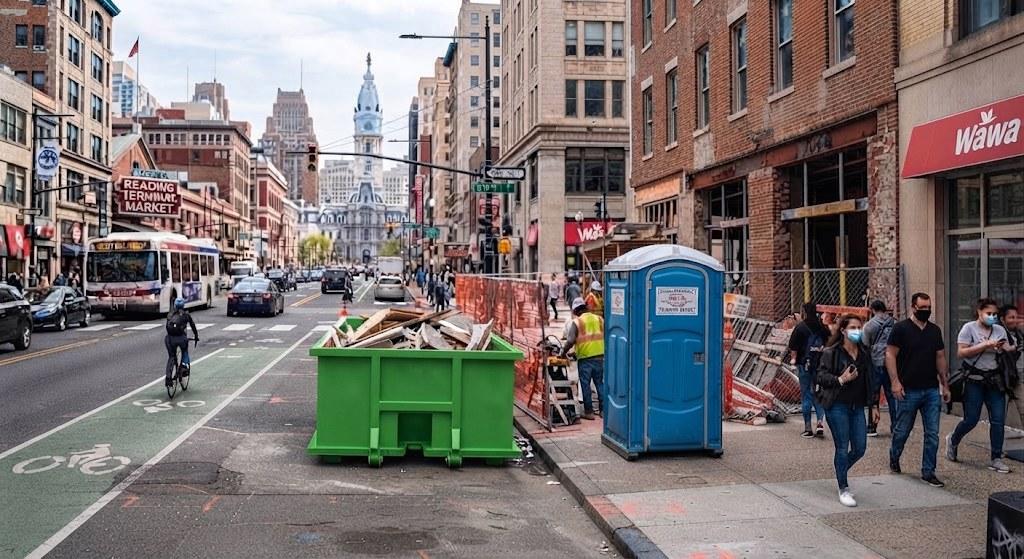
Porta Potties in Freezing Weather
A standard unit keeps working in the cold. The holding tank's contents can freeze in a long hard stretch, and the deodorizer works more slowly, but regular service keeps the tank from freezing solid. The bigger problems are placement and access: a unit in an open lot catches the wind, its door blows open or slams, and in a snowstorm the service truck can't reach it.
Move units out of the wind for the winter: against the building, behind the trailer or inside the shell once it's closed in. Keep the path to them shoveled and salted, both for the crew and for the service driver. On an upper floor, units go near the core, behind walls that are up, and tied down where the site's safety plan calls for it.
- Set units out of the wind, doors facing away from it
- Keep the route from the street to the units clear for the service truck
- Shovel and salt the path for the crew
- Tell the service company before a holiday shutdown
Flushing Units & Hand Wash Stations
Anything with fresh water freezes first. A flushing unit's flush water and a free-standing hand wash station's tank can freeze overnight in a hard cold. For a winter job, a flushing unit can be switched to a standard tank until spring, and hand washing moves somewhere the water won't freeze: an in-unit sink in a restroom kept out of the wind, a station inside the building's heated shell or a warm-water setup in the site trailer.
OSHA's washing-facility requirement for crews working with paint, coatings, concrete and similar materials doesn't go away in winter, so plan where the crew washes before the first freeze rather than after a station splits.
Office Trailers & Holding Tanks
The site trailer's restroom is the most fragile thing on the site in January. A drain line or a fresh water line that freezes stops the trailer's restroom, and a split line under the trailer is a mess to fix in the cold. Keep the lines short and insulated, skirt the trailer so cold air doesn't blow under it and keep the heat on inside, including over a holiday break.
If the trailer's heat has to go off for an extended shutdown, tell the holding tank service before you lock up so the tank can be pumped and the lines drained. See Office Trailer Holding Tank Rental.
Dumpsters in Snow & Ice
Snow adds weight. A dumpster left uncovered through a storm collects snow and ice that freeze into the debris and get weighed at the scale with everything else, so the weight ticket goes up for nothing. Tarp the dumpster when the crew leaves for the day, and before a storm if you can.
Ice also freezes debris to the walls and the floor, and a frozen load may not dump cleanly at the facility. Keeping the dumpster covered and swapping it before a long freeze helps. On the street, the dumpster has to stay clear of the plows' path and the travel lane, and the snow the plows push shouldn't bury it so the truck can't reach the hooks.
- Tarp the dumpster at the end of each day and before storms
- Swap it before a long freeze if it's close to full
- Keep the truck's path and the dumpster's hook end clear of plowed snow
- Keep it out of the travel lane and the plows' path
Storage Containers in the Cold
Steel containers ride out a winter without trouble, and the tools and materials inside do too, with a few exceptions. Paint, caulk, adhesives, joint compound and some sealants are ruined if they freeze, so they come out of the container and into a heated space for the winter. Batteries for cordless tools lose charge in the cold and charge poorly; bring them in at night.
Snow and ice on the doors can freeze them shut. Clear the snow in front of the doors and keep the locking bars free of ice. A container that's been sitting through a snowstorm may need the doors worked open carefully rather than forced. See Storage Container Rental.
Service Through Snowstorms
A snowstorm can delay service visits for a day or two, so plan ahead of a forecast. If a storm is coming before a scheduled service, ask for the visit a day early. After the storm, clear the path to the units and the dumpster before the trucks come back, because a driver who can't reach a unit can't service it.
If the site will be shut down through the storm, it's a good time to swap a nearly full dumpster and pump the units so they're ready when work restarts.
Before the First Hard Freeze
A short list, done in November, prevents most of the January problems.
- Move restrooms out of the wind and plan winter hand washing
- Switch flushing units to standard tanks if they'll sit through hard freezes
- Insulate and skirt the site trailer and its lines
- Move paint, adhesives and batteries to a heated space
- Keep tarps for the dumpster on site
- Agree on how service works around storms and holiday shutdowns
Placing Equipment for Winter
Where a unit, a dumpster or a container sits matters more in winter than in any other season. A few placement choices made before the first storm save a lot of trouble later:
- Set porta potties out of the wind, with the door facing away from the prevailing weather and toward the work.
- Keep the service truck's path short and on pavement that gets plowed.
- Put the dumpster where the plow won't bury it or block it in, and where the truck can reach it after a storm.
- Face container doors away from drifting snow, and keep the area in front of them shoveled.
- Keep everything clear of storm drains, where meltwater and ice collect.
Keeping the Crew Comfortable
A cold, dark, icy restroom is one the crew avoids, and a crew that leaves the site to find a warm bathroom loses time every day. In the coldest weeks, a few small things help: a unit placed where the morning sun hits it, a path to it that's shoveled and salted, and a service schedule that keeps it clean so nobody has a reason to skip it. For a large crew or a long winter job, a flushing porta potty or a restroom trailer with heat can be worth the step up.
The same thinking applies to the site trailer and the storage container. A container with lighting is easier to work in on a dark January morning, and keeping the tools inside it dry keeps them working. See storage container shelving & lighting for setups that help in the cold.
Related Pages
Sources
This guide explains the rules in plain language; it isn't legal advice. Permit requirements can change, so confirm with the city before the dumpster or the units go out.