Holding Tanks — Philadelphia, PA
Office Trailer Holding Tank Rental in Philadelphia
Office trailer holding tank rental in Philadelphia for job site trailers, sales offices and modular buildings with a toilet and sink but no sewer: a waste tank that collects what drains from the trailer, a fresh water supply to feed it, and pump-outs on a set schedule so the trailer's restroom just works.
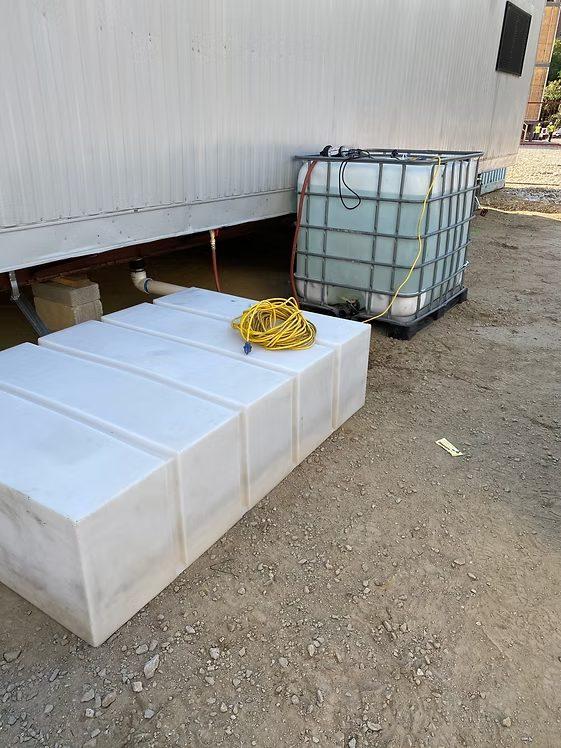
Most job site office trailers come with a toilet and a sink and nowhere for them to drain. Until the building's sewer connection is in, the answer is a holding tank: a sealed tank set beside or under the trailer, plumbed to its drain, and pumped on a schedule before it fills. Add a fresh water tank and the trailer has running water too, with no city connection at all.
Waste & Fresh Water
A holding tank for the drain, a fresh water tank for the toilet and sink.
Pumped on Schedule
Set by how many people use the trailer, before the tank ever fills.
City Permit Covered
Philadelphia requires a holding tank permit; we walk you through it.
One Invoice
With the porta potties, the dumpster and the container for the job.
Holding Tanks & Water Systems
Every setup has the same three parts: a tank to catch the waste, a supply of fresh water and a service schedule. Which tank goes in depends on how much room there is beside or under the trailer and how many people use it.
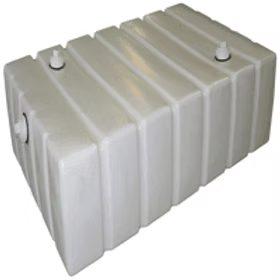
250-Gallon Holding Tank
A standard sealed polyethylene holding tank that sits beside the trailer and connects to its drain line. The everyday choice for a site office used by a super, a project manager and a few visitors.
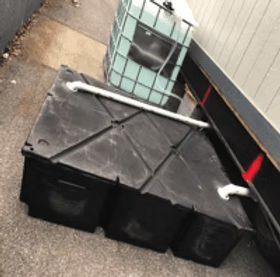
Low-Profile Holding Tank
A flat tank built to slide under the trailer or tuck against its skirt, where a full-height tank would be in the way of the steps, the walkway or a tight lot line.
Fresh Water System
A fresh water tank and pump that feed the trailer's toilet and sink when there's no city water at the site, refilled on the same visit the holding tank is pumped.
How a Holding Tank Works on a Job Site
The trailer's toilet and sink drain out through a pipe under the floor. Instead of running to a sewer, that pipe runs to a sealed tank on the ground. Everything flushed or washed down goes into the tank and stays there until the service truck pumps it out. Nothing goes into the ground and nothing runs into the street.
On the other side, the toilet and sink need water. If the site has a city water connection, the trailer hooks to it. If not, a fresh water tank and a small pump supply it, and the tank is refilled on the same visit the holding tank is emptied. Either way the people in the trailer use it like any office bathroom.
This is the setup on most new construction in Philadelphia before the permanent utilities are live, and on sites where a trailer serves as a sales office, a field office or a security post for months.
Philadelphia's Holding Tank Permit
Philadelphia regulates holding tanks. The Department of Public Health's Environmental Health Services issues a combined Portable Chemical Toilet or Holding Tank Permit, and the city says that if you want a storage or holding tank for sewage waste on your property, you must apply for one. The application asks for the site, the dates and the company servicing the tank.
Allow time for it. The city says its portable toilet permits take about 10 to 14 days to arrive, and the permit has to be kept on site. Apply as soon as the trailer's delivery date is set, and we'll give you the details the application asks for about the tank and the service.
How Often a Holding Tank Is Pumped
It comes down to how many people use the trailer and how much water goes down the drain. A site office with a super and a project manager fills a tank slowly. A trailer that's also the crew's restroom, or one with a busy sink, fills much faster. A tank that's pumped on a schedule never gets close to full; a tank that's pumped when someone notices is a problem at the worst time.
We set the schedule from the people who'll use the trailer and adjust it after the first few visits, when the actual fill rate shows. The goal is a tank that's always well short of full when the truck arrives. For a big crew, the better answer is usually porta potties for the crew and the trailer's restroom for the office.
Setup, Placement & Winter
The holding tank sits on level ground as close to the trailer's drain as it can, so the drain line has a steady downhill run with no dips where waste can settle. The service truck has to reach it, so the tank goes on the side of the trailer the truck can get to, not behind the material storage or the dumpster.
Philadelphia winters are the real test. A drain line or a fresh water line that freezes stops the trailer's restroom cold. Lines get insulated and kept short, the tank goes where it's protected from the wind, and the trailer's skirt keeps cold air off the plumbing underneath. If the trailer's heat goes off over a long holiday break, tell us before you lock it up.
- Level Ground: A firm, level spot right beside the trailer's drain outlet.
- Truck Access: The service truck's hose has to reach the tank, so keep the route clear.
- Short, Sloped Lines: The drain runs downhill to the tank with no low spots.
- Freeze Protection: Insulated lines, a skirt on the trailer and heat inside through the winter.
The Rest of the Site
A trailer with a holding tank is the office. The crew still needs porta potties in the numbers OSHA sets for the crew size, a hand wash station where they mix and finish, and on a tower, high-rise units on the working floors. Add a roll-off dumpster and a storage container and the whole site is on one quote, one invoice and one service schedule.
Sales Offices, Classrooms & Long-Term Trailers
Job site offices are the most common use, but they aren't the only one. A builder's sales trailer at a new townhome development, a modular classroom while a school is renovated, a church's temporary office, a security post at a large site or a field office for a utility project all have the same problem: a trailer with a bathroom and no sewer. A holding tank and a fresh water system make any of them usable for as long as the trailer stays.
Long-term trailers are where the pumping schedule matters most. A trailer used by a sales team six days a week fills a tank at a steady pace, and the schedule is set to that pace. A classroom trailer used weekdays only can go longer between visits. We set it from the people who use the trailer, not a standard calendar.
What Shouldn't Go Down the Drain
A holding tank is sealed, so whatever goes in stays until it's pumped. Wipes, paper towels, rags, grease and anything from the job site, like paint rinse, joint compound or concrete washout, can clog the line between the trailer and the tank or the hose on the service truck. Toilet paper and hand soap are fine.
A sign by the trailer's sink and toilet saves a service call. Paint and mud washout belong at a hand wash station or a washout area outside, not in the trailer's sink, and job site debris goes in the dumpster.
Planning Before the Trailer Arrives
A holding tank goes in right after the trailer is set and leveled, so the easiest jobs are the ones planned together. Before delivery, it helps to know where the trailer's drain outlet is, which side of the trailer the service truck can reach and whether the site has city water or needs a fresh water tank.
Send the trailer's size, the number of people who'll use it and the dates, and we'll send the tank setup, the pumping schedule and the information the city's permit application asks for, so the permit is filed while the trailer is still on its way.
When the Sewer Connection Goes Live
The holding tank's job ends when the building's own utilities are in. Once the trailer can tie into a sewer line, or the crew moves into finished space with working restrooms, the tank gets a final pump-out, it's disconnected and it's picked up. Call when the plumber gives you the date and the pickup is scheduled around it, so there's never a day with no restroom in the office.
On long jobs the trailer sometimes moves partway through, from the front of the lot to the back as the building fills in. The tank moves with it: pumped, disconnected, set at the new spot and reconnected on the same visit.
What Goes Into the Price
Every quote is built around your event or job, not pulled from a rate card. These move the price most.
- The Tank: A standard or low-profile tank, and whether a fresh water system goes with it.
- How Often It's Pumped: Set by how many people use the trailer, which is the biggest part of the cost.
- How Long: Rented by the 28-day period until the building's sewer connection takes over.
- Setup: Connecting the tank to the trailer's drain and, if needed, the fresh water to its supply.
Delivery, setup and pickup are on the quote, and the quote is in writing before you pay anything.
More From Philly Portables
Office Trailer Holding Tank Rental in Philadelphia: Questions
Do I need a permit for a holding tank in Philadelphia?
Yes. The Department of Public Health issues a Portable Chemical Toilet or Holding Tank Permit, and the city requires one for a sewage holding tank on a property. Allow about 10 to 14 days for it to arrive.
How often does an office trailer holding tank need to be pumped?
It depends on how many people use the trailer and how much water goes down the drain. We set a schedule so the tank is never close to full and adjust it after the first few visits.
Can you supply fresh water to the trailer too?
Yes. A fresh water tank and pump feed the trailer's toilet and sink when there's no city water at the site, refilled when the holding tank is pumped.
What size holding tank do I need?
A 250-gallon tank is the usual choice for a site office. A low-profile tank fits under the trailer where space is tight. Heavy use calls for more frequent pumping or porta potties for the crew.
What happens to the tank in winter?
Lines are kept short and insulated, the trailer is skirted and heated, and the tank is placed out of the wind so nothing freezes.
How much does holding tank rental cost in Philadelphia?
It depends on the tank, the pumping schedule and the length of the job. Send the address, the trailer and how many people use it for a written quote the same day.
Get a Quote
Send the details and we'll respond today.
A Holding Tank for Your Philadelphia Site Trailer
Porta potty rental, dumpster rental and storage container rental for your Philadelphia job, quoted the same day.