The Permit: How the City's Process Works
To apply for a block party permit, you have to be a resident of the block where the party will be held. Each block can request up to five street events a year, and one application can list several dates. The application goes first to your police district, which reviews the street closure and notifies you of the outcome within five days; if the district approves, it goes to the Streets Department for review and payment.
The city's fee for a block party on a weekend or holiday is lower when the application is in at least 21 days ahead, and higher if it comes in later; weekday block parties and other street events cost more. Check the Streets Department's current fees when you apply. Other street events, like birthday celebrations or weddings, are limited to six hours with no rain dates.
Philadelphia Streets Department street event fees, as listed by the city (check current fees when you apply)
Event: Weekend or holiday block party, applied 21+ days ahead
- Fee
- $25
Event: Weekend or holiday block party, applied fewer than 21 days ahead
- Fee
- $60
Event: Weekday block party
- Fee
- $150
Event: Other street event
- Fee
- $150
Do You Need Porta Potties?
On a short afternoon party, many blocks rely on neighbors opening their homes. That works until it doesn't: a long day, a big turnout, a DJ that keeps people out past dark and guests from off the block who don't know anyone with a bathroom. One or two units at the end of the block keep strangers out of houses and lines out of hallways.
Philadelphia's Department of Public Health says portable toilets at a public event need its permit, and the city's special event guidance lists that permit when restrooms are installed more than four days or there are more than 15 units. A one-day block party with a couple of units may fall below that line, but ask the Health Department about your event to be sure. See the Portable Toilet & Holding Tank Permit Guide.
Where the Units Go on a Rowhome Block
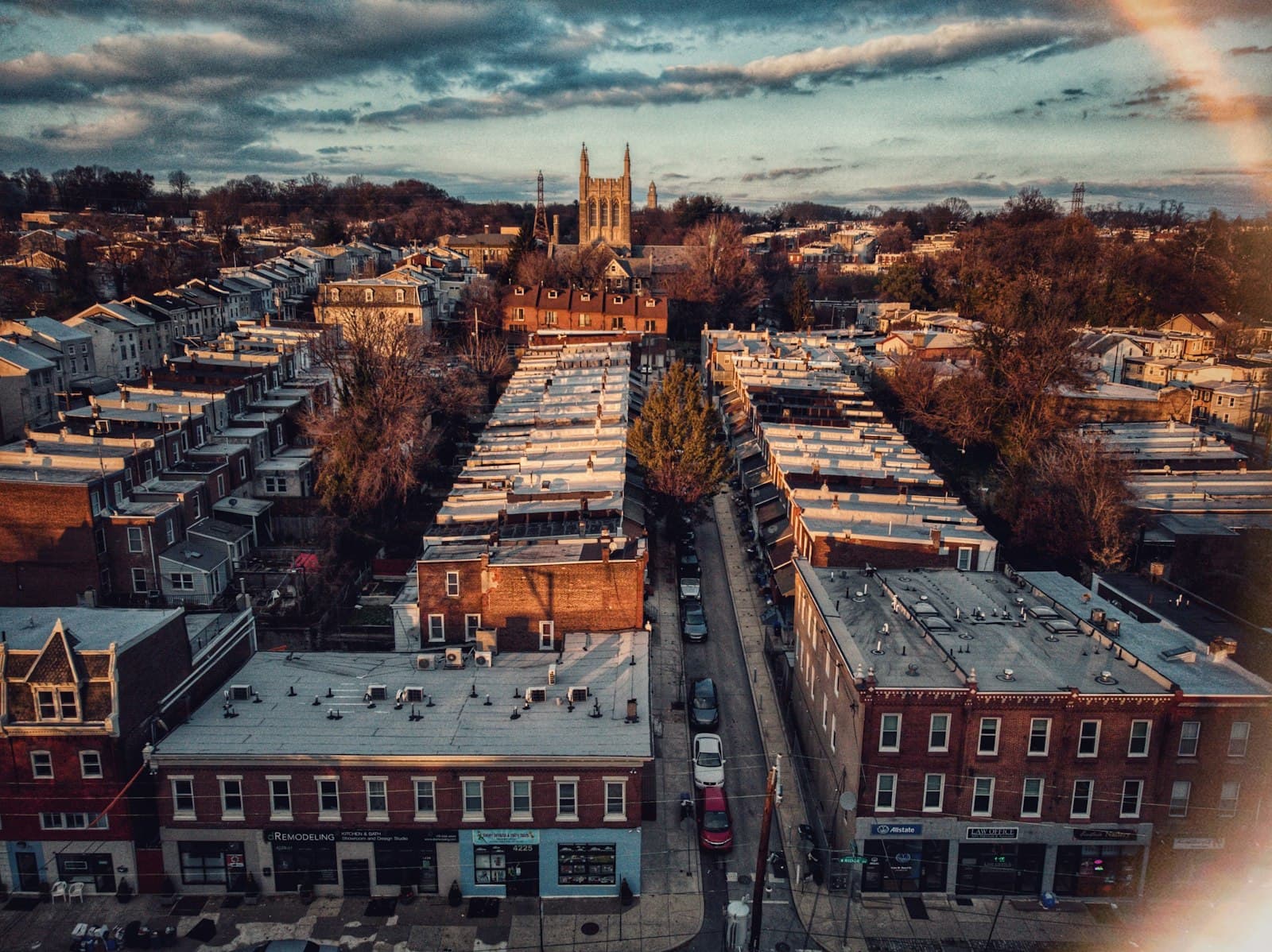
Put the units at one end of the closed block, on the street side of the barricade, where they're easy to find and out of the middle of the party. Keep them clear of fire hydrants, curb ramps and the neighbors' front steps, and leave the sidewalk passable. Face the doors toward the block, not the cross street.
Delivery happens before the street fills up, ideally the morning of the party or the evening before, and pickup the next morning. A unit on the street outside the event hours is in the public right-of-way, so plan the drop and pickup to stay inside the permit's times as closely as you can.
- At one end of the block, near the barricade
- Clear of hydrants, curb ramps and front steps
- Sidewalk left passable
- Doors facing into the block
- Delivered the morning of, picked up the morning after
Hand Washing & Food
Block parties run on food, and the grill, the crab boil and the bake table all mean hands that need washing. A hand wash station beside the porta potties and another near the food table does more for the day than any amount of hand sanitizer. If anyone is selling food, the Health Department's rules for food vendors apply, including hand washing at the booth.
An Accessible Unit
Older neighbors, guests who use wheelchairs and parents with strollers all need a restroom they can get into. An ADA-accessible unit has a level entrance and room to turn inside, and on a closed street the pavement makes a natural accessible route. For a public event, the ADA Standards call for at least 5% of each cluster of portable restrooms to be accessible, with at least one per cluster.
The Cleanup: Trash Pickup or a Dumpster
Cleaning up is the block's job, and the city keeps track: a block that leaves a mess makes its next application harder. The Streets Department offers an early trash pickup before the block's regular collection day for a fee, reserved at least five days ahead. For a typical party, that and plenty of bags is enough.
For a big party, a multi-block event or a party that's also a block cleanup day, a small dumpster at the end of the block takes everything at once. A dumpster on the street needs the Streets Department's approval and an L&I dumpster license; for a short stay, the Temporary No Parking route covers a temporary dumpster for up to seven days. See the Philadelphia Dumpster Permit & License Guide.
A Block Party Checklist
Start four to six weeks out and the block party runs itself on the day.
- Six weeks out: pick the date, collect neighbors' signatures and apply for the permit
- Four weeks out: book the porta potties, hand wash stations and an accessible unit
- Three weeks out: apply by now to get the lower weekend fee
- Two weeks out: decide on early trash pickup or a dumpster, and reserve it
- The day before: confirm delivery times and where the units go
- The day after: clean the block and confirm pickup
Talking to the Neighbors
A block party works best when everyone on the block knows the plan. The units and the dumpster are the parts most likely to bother a neighbor, so mention them early: where the units will stand, when they arrive and when they leave, and where the trash goes. A unit that shows up the night before in front of someone's steps with no warning is the most common complaint, and it's an easy one to avoid.
Put the units at the end of the block where the fewest front doors face them, or beside a corner property whose owner has agreed, and keep them away from anyone's windows. Tell the block when the dumpster comes and goes, and that it's for party trash only, so nobody fills it with an old couch the night before.
The Day After
The party ends, but the block doesn't belong to you until it's clean. The units are picked up the morning after, so leave a clear path to them and don't stack tables or chairs in front of their doors. The dumpster goes the same morning or the next, and anything that doesn't fit in it, like grills, tables and decorations, goes back to its owners.
Walk the block once more before the street reopens: trash bags out of the gutters, cups off the steps, chalk washed off the sidewalk if anyone minds. A clean block the next morning is what makes the neighbors say yes next year. See event rentals and the 10 yard dumpster for what to order.
Related Pages
Sources
- City of Philadelphia: Plan a Block Party
- City of Philadelphia: Apply to Hold a Block Party or Street Event (fees)
- City of Philadelphia Streets Department: Street Event Application
- City of Philadelphia: Apply for a Portable Toilet Permit
- City of Philadelphia: Apply for a Temporary No Parking (TNP) Permit (Moving Trucks, Storage Containers, Dumpsters)
- U.S. Access Board: Guide to the ADA Standards, Toilet Rooms (Portable Units, §213.2)
This guide explains the rules in plain language; it isn't legal advice. Permit requirements can change, so confirm with the city before the dumpster or the units go out.