
The Four Sizes and What They Hold
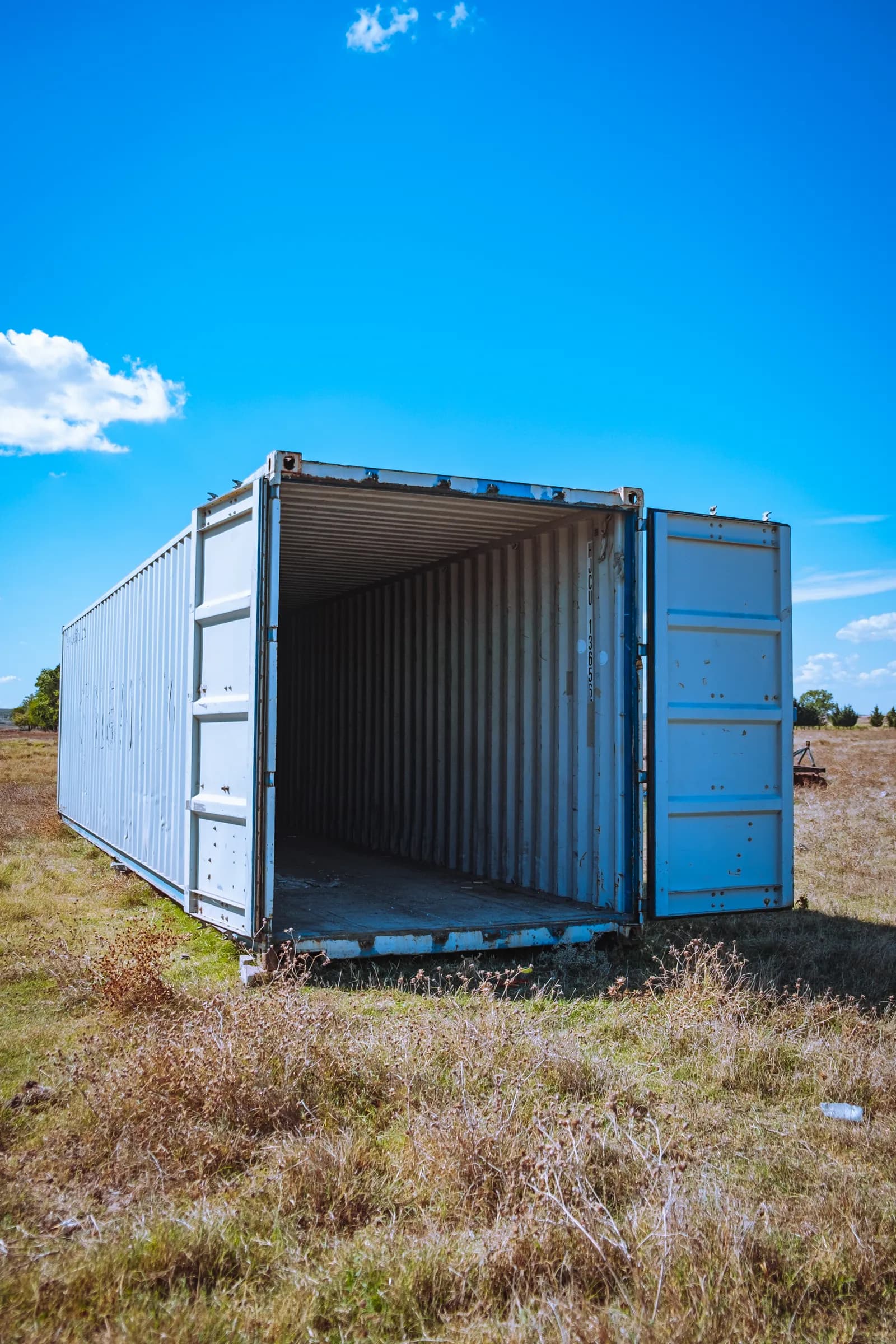
A storage container is a steel shipping container set on the ground: corrugated walls, a wood floor, double doors on one end, built to keep the weather out of cargo for weeks at sea. Every length is eight feet wide on the outside, and most stand eight and a half feet tall; high-cube boxes add a foot of headroom. The lengths are what you choose between, and the table below gives the approximate outside dimensions and the room inside once the walls and floor are accounted for.
The 10 foot box is for a lot with no spare room: it takes about the space of a parked car and holds power tools, ladders and a few pallets. The 20 foot is the one most jobs rent, with room to walk in and find things, and it fits in two parking spaces. The 40 foot is a warehouse on the ground for a commercial or multifamily job, or a business putting a whole floor into storage during a renovation. The 48 foot, the longest box we set, is for a large job's laydown yard under a roof and for long material like pipe, conduit and trim that won't go in anything shorter.
Approximate container dimensions (standard-height boxes)
Length: 10 foot
- Outside
- 10' × 8' × 8'6"
- Inside (About)
- 9'3" × 7'8" × 7'10"
- Floor Space
- 70 sq ft
- Holds About
- 560 cubic feet
Length: 20 foot
- Outside
- 20' × 8' × 8'6"
- Inside (About)
- 19'4" × 7'8" × 7'10"
- Floor Space
- 150 sq ft
- Holds About
- 1,170 cubic feet
Length: 40 foot
- Outside
- 40' × 8' × 8'6"
- Inside (About)
- 39'5" × 7'8" × 7'10"
- Floor Space
- 300 sq ft
- Holds About
- 2,390 cubic feet
Length: 48 foot
- Outside
- 48' × 8'6" × 9'6"
- Inside (About)
- 47'5" × 8'2" × 8'10"
- Floor Space
- 390 sq ft
- Holds About
- 3,000 cubic feet
Size It by the Job, Not the Inventory List
Contractors tend to size a container by what's going in on day one and then run out of room by week three, when the cabinets, the fixtures and the trim package all arrive at once. Count what the box has to hold at the busiest point of the job, not at the start. A gut rehab on a rowhome usually needs a 20; a townhome row or a small commercial fit-out often needs a 20 for the general contractor and a second 20 for a trade that brings its own gear. New construction with a fenced laydown area is 40 foot territory, and a 48 when long material is part of the order.
For a business, think in rooms. A 20 foot container holds about what fits in a one-bedroom apartment or a small office suite; a 40 foot holds a floor of desks, files and equipment while the space is being renovated. If you're between sizes, the bigger box costs less than a second delivery when the first one fills up.
The Storage Container Rental in Philadelphia page lists every size we deliver and the options that go with them: ground-level double doors, a lock box for the padlock, and shelving and lighting on request.
Where the Box Can Sit in Philadelphia
A container on your own lot, a driveway or a fenced site is the simplest placement: level ground, firm enough to hold a loaded steel box without sinking, and a straight run for the delivery truck to back in. A tilt-bed truck sets the container down by sliding it off the back, so it needs clear space in a straight line beyond where the box will land. Tell us where the truck can stop and what's overhead (wires, tree limbs, a fire escape) and we'll confirm the approach before delivery.
In the street is a different question. Philadelphia's Streets Department issues a Temporary No Parking permit for a storage container or pod in a parking lane, and the City caps that placement at five days. That's built for a move, not a month-long job, so a container that has to stay for the length of a project belongs on the lot, not at the curb. Apply at least four business days before you need the space, and post the signs the police district gives you before the truck arrives.
A container used as anything more than storage (an office, a workshop, a box with power run to it) can bring zoning and building review into the picture, so tell us how you'll use it when you ask for the quote. The Philadelphia Dumpster Permit Guide covers the same Streets Department rules for a dumpster, which often shares the block with the container.
Keeping What's Inside Dry and Easy to Find
A container keeps rain out. It doesn't keep moisture out of the air inside, and that's the thing that surprises people in a Philadelphia spring. Warm, damp air gets in every time the doors open; on a cold night it condenses on the steel ceiling and drips onto whatever's underneath. Cardboard boxes of tile wick it up. Bags of mortar and drywall compound set. The fix is cheap and takes ten minutes on delivery day: keep everything off the floor on pallets or dunnage, keep paper goods and bagged product away from the walls, and put a few buckets of desiccant or a moisture absorber near the back. If the job runs through winter, a vent kit on the box keeps the air moving.
The other mistake is loading by arrival date. The first delivery goes in the back, the next in front of it, and by the time the plumber needs the fixtures that came in week one, the whole box has to come out onto the sidewalk. Load it by when you'll need it instead: finish materials and fixtures for the last phase at the back, framing hardware and rough-in material at the doors. On a 40 or 48 foot box, shelving down one wall and a clear aisle down the other turns the container into a stockroom instead of a pile. Ask about shelving when you order, so it's settled before the box is set.
Keep a running list taped inside the door of what went in and what came out, with the date. On a job with three trades sharing one container, that list ends more arguments than any lock does.
Security on a Philadelphia Site
A shipping container is a steel room with one way in, which is why contractors store tools in it instead of in the building. Still, a padlock hanging in the open is an invitation. A lock box is a welded steel shroud over the hasp, so a bolt cutter has nothing to grip and a pry bar has nowhere to go. Ask for one when you order, and bring a puck-style padlock, the round kind with the shackle hidden, which is the lock the shroud is made for.
Where the box sits matters as much as how it's locked. Put the doors facing the building or the fence rather than the sidewalk, so anyone working on the lock is doing it in view of the job and not from a parked car. On a lot that's dark after the crew leaves, a motion light on the container or the building does more than a camera does. And a container in a fenced laydown area beats one on an open corner lot, if the site gives you the choice.
One more habit that costs nothing: tools go back in the box at the end of every shift, even the last day before a holiday weekend. A container that's locked with the tools inside is doing its job; one that's locked while the saws sit in the back of a truck isn't.
Delivery Day: What to Have Ready
The truck arrives, backs to the spot, tilts the bed and slides the container off onto the ground. It takes a few minutes when the site is ready and an hour of phone calls when it isn't. Before the delivery date, make sure of five things: the spot is level and firm, with no soft fill or fresh asphalt; the straight approach is clear of parked cars, material deliveries and the roll-off; nothing hangs over the landing zone, from service drops to tree limbs; the gate is open or someone has the key; and someone on site can say yes to the final position. If the box has to go on a slope, tell us ahead of time so the driver brings blocking to level it, because a container that sits out of level will have doors that bind.
Tell us too if the site has a dumpster coming the same week. The two trucks need different runs, and it's easier to sequence them on a phone call than to have a roll-off truck and a container truck meet on a rowhome block at the same hour.
How Long You'll Keep It
Containers rent by the month and run until you call for pickup, so a job that stretches is just a longer rental, never a penalty. A business clearing a floor for a six-week renovation and a contractor on a nine-month build pay the same monthly rate for the same box. When the job wraps, empty the container, call or email, and the truck picks it up.
If you'd rather not measure, send us what you're storing and the address through the quote form and we'll come back with the size, the placement and a written quote the same day. Restrooms and a dumpster for the same site go on the same quote and the same invoice.
Related Pages
Sources
This guide explains the rules in plain language; it isn't legal advice. Permit requirements can change, so confirm with the city before the box or the units go out.